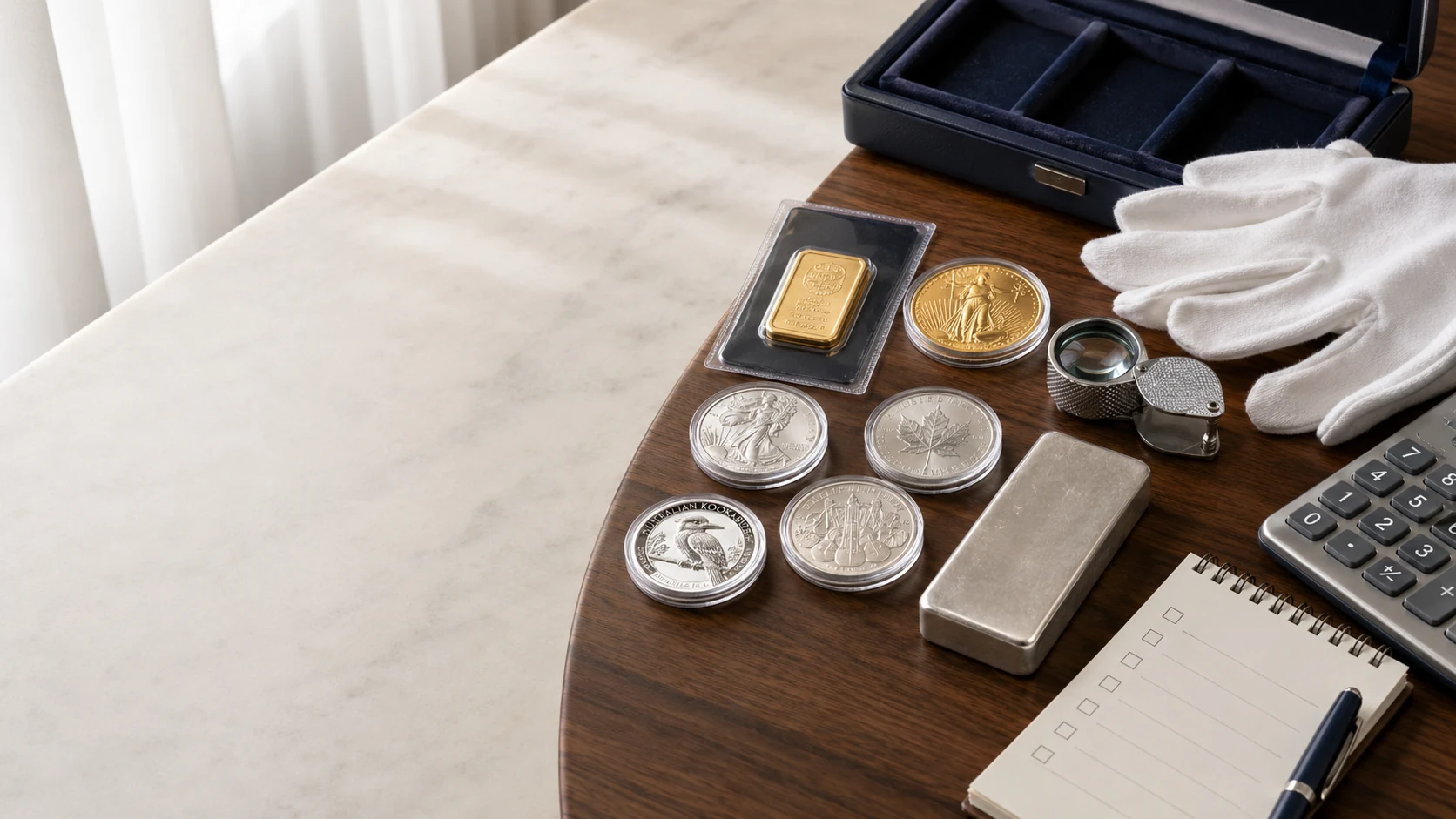
The goal of a first purchase is not to prove that you predicted the market. It is to understand the entire physical transaction without paying for confusion.
1. Decide what you actually want to own
Gold stores more dollar value in less space. Silver usually offers a lower entry cost but becomes heavy and bulky faster. Bars often emphasize metal-per-dollar efficiency. Sovereign coins usually emphasize recognizability and divisibility.
2. Learn four numbers
- Spot price: the wholesale reference price for the metal.
- Premium: the amount above spot charged for the finished product.
- Delivered cost: product price plus shipping and payment-related costs.
- Buyback spread: the difference between what you pay and what a dealer would pay to buy it back.
3. Compare the exact same order
Do not compare a card price at one dealer with a bank-wire price at another. Match product, quantity, payment route and delivery destination.
4. Plan storage before checkout
A small order may fit in a compact home safe or safe-deposit arrangement. Larger holdings can require insurance review or professional storage. Avoid publishing or casually sharing storage details.
5. Keep the first order boring
Widely recognized bullion bars, rounds and sovereign coins are easier to understand than heavily promoted limited editions. Collectible products can be enjoyable, but they require a separate numismatic valuation skill set.
Affiliate links may earn us a commission. Compare the final delivered price, payment method, shipping, cancellation and resale terms before ordering.